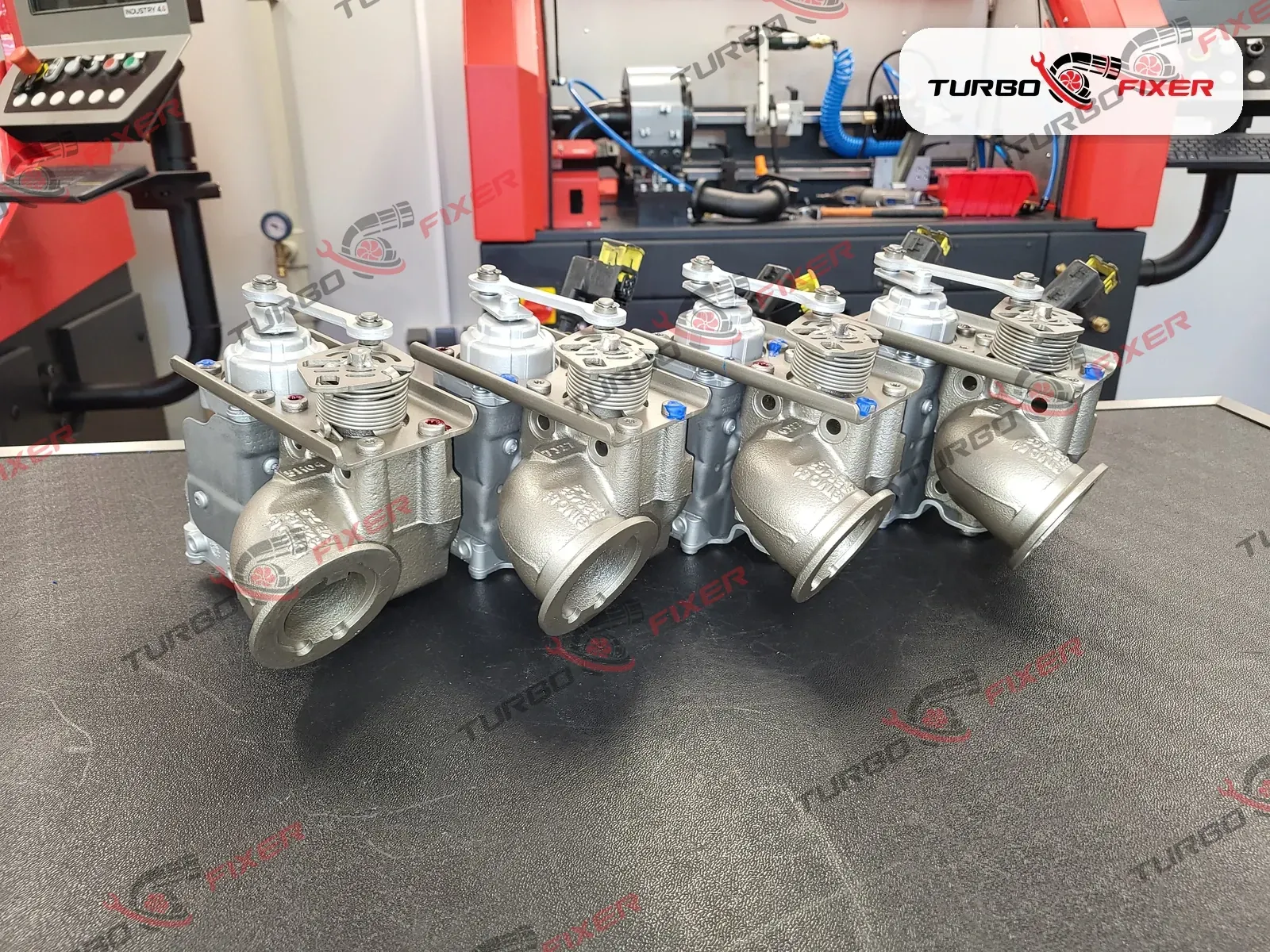
For a fleet, the expensive part of a valve or turbo failure usually isn’t the part — it’s the truck sitting still. A BPV, EGR or Holset turbo rarely fails without warning, so the operators who keep utilisation high are the ones who act on the early signs and schedule the fix, rather than waiting for a limp-mode event on a motorway.
The early warning signs
Most DAF MX air- and exhaust-path faults announce themselves before they become a breakdown. Worth flagging at the next inspection:
- Engine brake feels weaker than it used to — a classic early sign of a back-pressure valve (BPV) or engine-brake solenoid losing control.
- Power tails off uphill or under trailer load — developing turbo underboost or a sticking EGR.
- Black smoke under acceleration — underboost or an EGR stuck open.
- Turbo whistle, siren or squeal above ~1,500 rpm, or blue smoke at idle — turbo bearing or seal wear.
- Fuel consumption creeping above baseline — often the first measurable symptom, before any dashboard light.
A driver noting “the brake isn’t biting like it did” is cheaper to act on than a recovery truck.
Why planned beats emergency
A planned diagnosis lets you choose when the truck is inspected and avoids treating every fault code as a parts order. For accepted BPV work, the standard workshop target is 5–9 business days from receipt (or 3–4 business days express); transport time remains route-dependent.
TruckValves does not require a deposit before accepted work begins. The written quote confirms payment timing, diagnostics, shipping and what happens if a submitted BPV unit is not rebuildable.
A simple maintenance rhythm
- Log the symptoms, not just the codes. A note like “weak engine brake, no light yet” at inspection is the single most useful diagnostic input. Our diagnosis guide maps symptoms to the likely component.
- Check the cheap stuff first. Charge pipes, intercooler and connectors for leaks, oil film or corrosion — before condemning a valve or turbo.
- Confirm the part, then schedule. Use the OEM & fault-code finder to identify the component, then book regeneration into a planned window.
What it looks like across a fleet
Use your own last-12-month replacement count rather than a generic fleet failure benchmark. The ROI calculator compares your entered annual BPV count and supplier price with the published workshop charge; it excludes shipping, tax and downtime.
Spotted an early symptom on one of your trucks? Send the OE label, fault code and photos for identification. A written quote confirms whether TruckValves supports that component and the applicable workshop target.